About me and my career so far...
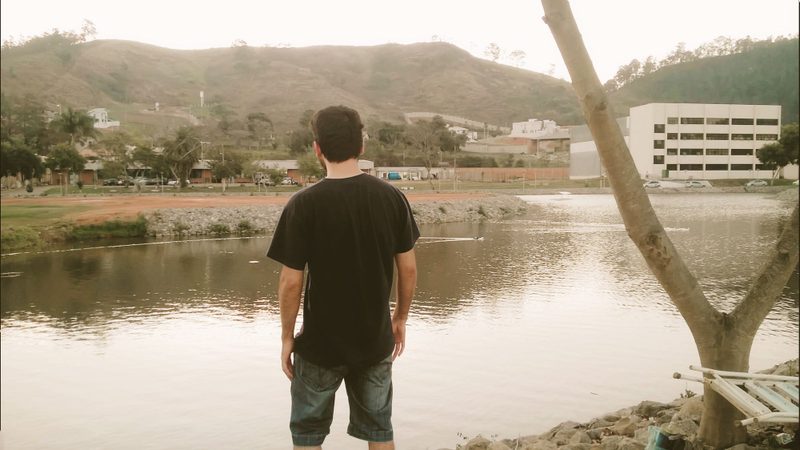
I am a Software Quality Engineer at Red Hat, on the Ansible Automation Platform. The product I’m working on empowers multiple industries, like finance, oil and gas, logistics, and even autonomous vehicles.
I previously worked on projects for multinational companies, fintechs, and banks. But everything began with an old and offline computer.
My childhood (2005-2008)
I was born in 1993 in São Paulo state, Brazil, five years before Google existed. I was a child who enjoyed biking with my few friends, playing video games, breaking my computer, and setting fire to paper and wood. My sister gave me my first computer in 2005, an Acer Aspire (Intel MMX, 64 MB RAM, Windows 98), an old machine even for the time.
I had a friend called Paulinho, and we were always breaking things while trying to improve them. One of those “improvements” was installing Kurumin Linux, a Brazilian distribution based on Debian that used KDE as its desktop environment. We had no idea what we were doing, ended up with no sound and no internet, and had no clue how to install the drivers, so we soon rolled back to Windows 98 with Chinese drivers for the dial-up modems.
Breaking and fixing my computer many times a month was my first experience with what would become my career.
Oh, and I loved my Super Nintendo.
My high school (2009-2011)
I studied at Colégio Embraer Juarez Wanderley, one of the best high schools in Brazil at the time. I had to take an entrance exam and be among the top 200 candidates.
I left for school at 7 AM and got back home at 7 PM every day. My books, clothes, bus rides, and food were all paid for by the school. Those details are worth mentioning because my family never had money, and I never asked for expensive gifts. I had a simple bike, an old used computer, and an old game console with pirated games, and it was perfect.
During high school, I had some friends who built many projects with me. I bought the “TheNets.org” domain name (using my mom’s name and credit card), and I hosted many of those projects on it. We created OpenTibia servers, an anime fansub, torrent trackers (to distribute the anime files), download portals for software and anime, blogs about games and other subjects, and many, many other things.
That was my first experience with programming languages: setting up OpenTibia and RPG Maker scripts, and writing PHP and JS for the websites.
The first two years were the best period of my life.
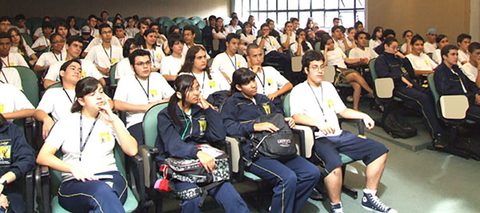
I’m in this picture :)
My university (2012-2018)
I studied at the Federal University of Itajubá (UNIFEI). I have some bad memories of classrooms and teachers, but I met many incredible people there too.
During my degree, Melise, a professor and researcher, accepted me into her lab, with a focus on Open Data. I started researching Open Data at the time to propose a rebuild of the Brazilian Open Data Portal (dados.gov.br). I was never an academic person, so I soon left the research program and started an internship to recreate and rewrite dados.gov.br.
A guy called Alerson, who would become a friend of mine, and I started to learn how to install and manage the CKAN platform (https://github.com/ckan/ckan), an open-source project used by dados.gov.br and many other data portals around the world. Our job was to understand the requirements to get CKAN up and running and to customize the platform with the features the government requested. One thing worth noting is how little documentation and troubleshooting information existed for CKAN at the time. I needed to talk to people from different governments around the world to understand, fix, and improve the platform. That was an incredible opportunity to meet people from Canada, the USA, the UK, France, Japan, and China.
Later on, Jonas and Flavio joined the team, and we worked not only on dados.gov.br but also on other projects from Rio de Janeiro startups focused on solutions for cities and public policies.
I worked in the lab at UNIFEI for two and a half years. Over time, my job became more about creating tools, servers, and pipelines. My role shifted from writing code to making sure my team had everything they needed to work, so they never had to waste time thinking about how to deploy or set up a dev environment.
That period was awesome. I learned how containers work, how to code in Python, how to build more advanced solutions in JS, and — most importantly — how to work in a group and respect people.
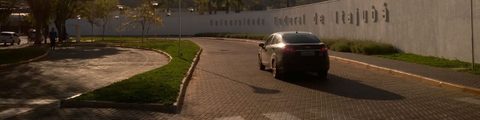
UNIFEI - 2018
I became a consultant (2018 - 2019)
A few months before I got my bachelor’s degree, I started consulting for some startups in my city (Itajubá - MG). One of them was B2ML, the biggest software house in the region. I didn’t have a specific task. The CEO, Bernardo, trusted me to help the teams and do whatever I wanted to improve the quality and performance of the people working there.
I created a centralized Git repository for the company, rebuilt the entire infrastructure in the cloud, migrated over 90 legacy applications to Linux containers, set up backup solutions, built tools to manage the infrastructure, added metrics, monitoring, and alerts, deployed a firewall and WAF, gave training, and so on.
During my last months at B2ML, I helped architect an AWS environment using IaC (HashiCorp Terraform) for a financial application. Another challenging task that taught me a lot.
That may have been the best experience I could have had. I learned a lot, and I’m grateful for the opportunity, which soon opened other paths for me to follow.
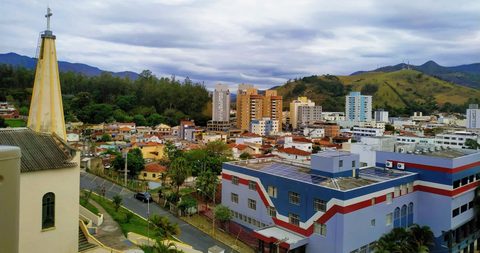
Itajubá - MG, Brazil
During that period, at the beginning of 2019, I started working remotely at ROI Hunter, a Czech startup that built a performance marketing platform for Facebook, Instagram, and Google Ads. That was my first experience working in English. It was very different from my previous jobs, and I was excited about the idea of moving to a European country.
I received feedback that I had done very well in the interview process, and a few weeks later I started the job. But a few more weeks later, everything went wrong, and fast. At that moment, the company needed someone who knew Google Cloud Platform, Logstash, Ansible, and how to integrate with some custom vaults built by the team, and I couldn’t learn all of that in less than ten weeks.
As a result, they decided to let me go. I had performed well in the interview, but I didn’t have the experience the role required. Still, I can only be grateful to everyone there. They were always busy, but always tried to help and guide me. I learned a lot, and I was happy to go back to consulting for a little while longer.
Oh, and now I know that “bunda” means jacket in Czech.
Fun fact: part of the feedback I received said I wasn’t great at writing Ansible automation.
And… two years later I started a new job at Red Hat, working on the Ansible Automation Platform.
Big companies, big challenges (2019 - 2020)
At the end of 2019, I joined Locaweb Corp Cluster2Go, a company that would be renamed Nextios a few months later. The company builds and maintains cloud solutions for other companies. At this point, I think it’s worth talking a little more about the hiring process.
One of the company’s managers visited the small city I lived in, and someone recommended me. I met him, we talked for 20 minutes, and he asked me to meet the company’s cloud solutions specialist. His name was Valter.
That was the most unforgettable and exciting interview I’ve ever had. We talked about everything related to the software lifecycle, from weird errors during compilation to kernel limitations in some applications. It wasn’t just about the role — it was about engineering, computer history, and the challenges of creating and maintaining an environment where everyone can work. One thing still sticks with me today: Valter was better than me on every subject we discussed.
After the interview, I was eager to know whether I would join the team. I did.
During my first month, I started working on small projects for a bank. Soon I earned my manager’s respect, and I got a much more complex project. At that point, I had to build the entire infrastructure for a dozen microservices on AWS — my first experience with something at that scale.
Things started to grow fast, and I earned more respect from my team. I built some PoCs, wrote tools for the whole team, and much more.
By the end of 2020, I was involved in many projects and was training other members of my team.
My team became my family. I cared about them. I helped and protected them.
My burnout (early 2021)
During the New Year holiday, I started crying without knowing why. I had worked through Christmas and, before that, I had been solving problems for big customers on multiple weekends in a row. I was exhausted. I had pushed myself beyond what I should have.
I liked my team, but there was no reason to work that much. I was tired, and I wanted to quit.
On January 4, the first day back after the New Year break, I let my manager know I would be quitting. I was emotionally unstable. I needed to rest.
During this period, I went back to consulting. Friends and their bosses would message me asking for support or training. It was more than enough to pay my bills, so I decided to keep living that way indefinitely.
Red Hat and a new beginning (second half of 2021)
During my burnout period, Demetrius, a friend of mine, messaged me asking whether I’d like to be recommended to some companies he had worked for, or to one where his friend worked — that last one being Red Hat. Demetrius ended up recommending me as “a great professional who doesn’t want to work anymore after his burnout” and, even though he said it jokingly, it was kind of true, since I was enjoying consulting again and was finally able to take care of my health and body.
The recommendation moved forward and I went through the interview process. It was very focused on software skills and cultural fit, and I really liked what I heard about Red Hat and the project. Red Hat (https://www.redhat.com) is a company whose main projects are open source and available to anyone, and that mindset extends, to some degree, to the company’s culture. The project I was applying for was AAP — the Ansible Automation Platform — specifically its main component, the Automation Controller (the open-source version is AWX: https://github.com/ansible/awx).
I received good feedback and was accepted. In June 2021, I had a new job — a full-time job where I would only speak and write in English.
So, do people who join a company through a referral not deserve the job?
This experience changed my opinion about referrals. Maybe I’m biased since I joined Red Hat through one, but now I understand how valuable they are.
I used to think that people who joined a company through a referral didn’t deserve much credit, because they had taken an easy path. Now that I’ve joined a big company through a referral myself, I see how hard it is to find people suitable for a role — and how valuable it is to have a recommendation from an employee you trust. An existing employee understands the pain points of the project and the company, and can better identify people who would be a great fit to solve those problems.
This new job was a completely different experience for me. The best engineers I met at the company were very impressive. It was also the first time I had so many people I could ask for help. I wasn’t on my own trying to solve most of the hard problems anymore.
I was no longer an “infrastructure guy” using tools from Ansible and HashiCorp. Now, I was a Software Quality Engineer on the Ansible Automation Platform.
The Quality Engineer role was totally new to me. I had to pay attention to the project and to customer needs in a very different way. Things like Jenkins pipelines and pytest became important parts of my daily work. My first experience with the software quality process was validating Receptor (https://github.com/ansible/receptor) behavior when integrated with AWX (https://github.com/ansible/awx).
I wouldn’t have grown so much if it weren’t for Elijah, Jim, Bianca, and Alan. I was totally lost trying to do even the most basic tasks, but they were very patient with me and taught me what I needed to learn about the project and the QE role. It was an amazing team, and they supported me the whole time. I’m very happy to have been part of that team.
Being a Software Quality Engineer (2022)
The year is 2022. I’m still new as a Software Quality Engineer, but I have enough experience to start looking for new challenges in my role. My old team, unfortunately, vanished after some changes in the company, and now I’m on my own.
Trying to find my place…
I need to find my place on the team and in the project. I ended up focusing on cleaning up part of the tech debt and training my team. We have a huge and complex project, so there’s a lot of knowledge to share across the team. One of my attempts was a CLI I built to simplify the use of our internal test suites, so that anyone from our team or from other teams would be able to easily set up and run tests. I’m very proud of the feedback I received from members of my team and from other teams.
Even though I believed my work at the beginning of the year was important, the feedback I received from my manager wasn’t great. I wasn’t delivering as much as the company expected. So something had to change. I don’t have an important task anymore, and my contributions don’t seem important anymore either.
The following section was written on September 7, 2022, after AAP for AWS was announced. More about that here: https://www.youtube.com/watch?v=J7YRaPzKw4A&t=3610
The AAP for AWS. My new home…
WIP.
Here I am (2022)
Today is October 29, 2022. I hope to keep this post up to date as my career continues.
To you who made it this far: I hope my story can somehow inspire you to do your best and be happy with the career you chose.
